Monday, 18 September 2017

In Depth Study - Mojo

Monday 18th September 2017

L.O. analyse the target audience for music magazines.

  • Publisher - Bauer (since January 2008)
  • Circulation - 79,345
  • Target Audience demographics

My Improved Mojo Magazine Reader Profile:


Monday, 11 September 2017

The Music Industry

Monday 11th September 2017

The Music Industry

L.O. identify and explain different music genres.


Music Genres:

  • Pop
  • Rap
  • Rock
  • Alternative
  • Christmas songs
  • Heavy Metal
  • Country
  • Electronica
  • Dance
  • Metal
  • Classical
  • Opera
  • Jazz
  • Reggae
  • Grunge
  • K-pop
  • Techno
  • R&B
  • Drum and bass
  • Guitar
  • Dubstep
  • Blues
  • Folk

Rock

1- What the stars look like:

Rock stars tend to wear a lot of black leather. Some wear sunglasses, jeans and metal studs. Rock stars tend to be male and also wear a lot of gothic clothing with images like skulls on.

2- How the music sounds:

Rock music typically sounds quite loud and sometimes involves shouting. A lot of rock music uses instruments like drums, electric guitars.

3- Things they sing about:

Lots of rock songs are about life, problems and current affairs. Many are also about love just in a very expressive way.


Pop

1- What the stars look like:

Pop stars usually wear new and the latest trends. Many of the female artists tend to wear perfect makeup and done up hair and the mail artists usually wear their hair like the latest trends.

2- How the music sounds:

Most pop music sounds quite upbeat but generally has a variety of different sounds. Pop music tends to be quite fast pace but some songs are slow. A lot of chart music comes under pop music.

3- Things they sing about:

Mainly pop songs are about love and relationships but can also be about other things like friendships and current affairs.


Dance

1- What the stars look like:

Like pop artists, lots of dance artists look up to date with current trends when it comes to their appearance. Many male artists tend to wear quite casual t shirts and jeans.

2- How the music sounds:

Most dance music is fast pace and has a loud beat in the background. A few dance songs have little words and usually a DJ that makes a beat for people to dance to.

3- Things they sing about:

Most dance songs are about love and music.


R&B

1- What the stars look like:

Most female R&B singers have stylish hair and wear little items of clothing and usually high heels. Many male R&B artists wear items like baseball jackets, ripped jeans, high top trainers and sunglasses.

2- How the music sounds:

R&B music is intended for black people but anyone can listen to it. It is a mix of jazz, gospel and blues. R&B music is slower than hip hop and most R&B songs have electronic or acoustic backing tracks.

3- Things they sing about:

Most R&B songs are about love, relationships and life problems.


Rap
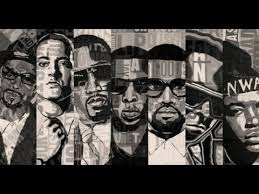

1- What the stars look like:

Typically, rappers have lots of tattoos everywhere including their face and wear gold jewellery like rings and chains. Some of them also wear quite baggy clothing and most of the time it is branded. Lots of male rappers have beards, moustaches and dreadlocks.

2- How the music sounds:

Rap music is very fast paced and the rappers 'spit' lyrics out very quickly. Most of the time there is a bit of swearing but its ok because the music is so fast you can't hear it.

3- Things they sing about:

Lots of rap songs are about problems in the world like crime and racism/equality. But can also be about love and relationships.


14/09/17

Pop


1- Target audience:

In general, the target audience are people around the age of 13-25 and mainly aimed at white females because of the love and relationships theme- however all genders can listen to pop music. Pop music can be aimed at any social class as it is such a broad genre.

2- Magazines:

Some pop music magazines include i-D and Paper who often put pop stars on their covers. Magazines whose content is mainly pop is We 💗 Pop, Pop and Top of the Pops. Pop magazines are very brightly coloured and aimed at girls and young women.

3- Pop Example Link:

https://vimeo.com/147736999


Rock

1- Target audience:

Rock music is generally aimed towards middle aged, working class men who may be having a hard time in life as this music could relate to them. I don't think that rock music is restricted to a certain ethnicity or nationality.

2- Magazines:

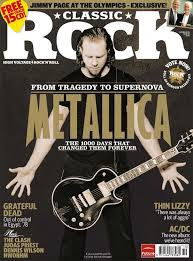
The most popular rock music magazines are probably Classic Rock, Rock Sound and Kerrang! The covers of these rock magazines have a lot of dark colours like black and grey.

3- Rock Example Link

https://vimeo.com/57766800


Rap

1- Target audience:

I think that rap music is a very diverse genre in terms of gender as there are more and more female rappers aiming their music at women. I think the age of the target audience varies but mainly around 16-30 years old. The ethnicity of the target audience is mainly black people however more and more white people are listening to rap. I think that in general rap music is aimed towards lower and working class as like rock, people of these social classes can relate to what the artists are saying.

2- Magazines:

Popular magazines that focus on rap music can be Vibe, XXL and Hip-Hop. These magazines are not very colourful and the people on the covers don't look overly happy.

3- Rap Example Link:

https://vimeo.com/81020423


Monday, 22 May 2017

Trailer Analysis

Monday 22nd May 2017

  • Film: It ( https://trailers.apple.com/trailers/wb/it/ )

  • Genre: the genre of the film is horror and this shows through the character of the scary clown, the dark scary house and even the font of the title.

  • Camerawork: close-up shots of the kids are used to show they are scared,  eye line match is also used when a character is looking at something and it cuts to what they're looking at, a montage is also used on the whiteboard when the kids are in the house to eventually show the clown in the pictures.

  • Editing: cutting has been used for dramatic effect, some of the transitions are fade to black to show passing of time and/or for effect, and the length of each shot is quite short which is normally what horror movies have anyway.

  • Sound: most of the sound is diegetic for scary elements like footsteps, this makes it easy for the character to act scared.

Monday, 15 May 2017

Sound

15/05/17

L/O: to understand how any why sound is used in film.

  • All sound used is known as the soundtrack.

Diegetic and Non-Diegetic 
  • Diegetic- sounds that the character would expect to hear. (e.g when walking, footsteps)
  • Non-diegetic- sounds that the character wouldn't be expected to hear (e.g. narrations, music, voiceover)

Task 1
  • Breathing, people outside, footsteps, the fire, the birds, the key turning, fairies talking to her, eating, scary man shouting, wind from birds wings, plate on table, gasp, screaming, dialogue.

Dialogue
  • Can be recorded on location
  • Or recorded after filming.
  • Most dialogue is recorded separately and added on afterwards, this is called Audio Dialogue Replacement (ADR).

Foley
  • Foley is the reproduction of everyday sounds for use in filmmaking.

Task 2
  • Bench swinging, creaking roof, clicking button, crashing, touching levers, leaves, crying, sniffing, boy falling, chair, rock dropping.

Task 3
  • Glass shattering, ground breaking, things falling, laser gun, disintegrating floor.

Music in Film
  • Part of the Mise-en-Scene
  • Used to create a certain atmosphere
  • Can establish a time or place
  • Used for tension, atmosphere, time or setting.
  • Silence or lack of sound can also be used for effect.


18/05/17

Sherlock Holmes fight scene


  • Silence from everyone when he wins
  • Music back to normal at the very end to set the scene again
At the start...
  • There is traditional fast paced folk music which is non-diegetic at the start of the scene so you can tell what time period the scene was set in. The crowd is cheering very loudly which shows this fight is a bit rowdy. At the end of this section, the opponent spits on the back of his head, this sound is increased in volume because it is important and makes it clearer as to what he did.

In his head...
  • In this section, there is internal dialogue as he is thinking about what moves he is going to do. His talking is clear and fairly fast pace even though they have slowed the movement down. When he is thinking about his shots, moves, etc, the sounds of the punches, shots, blocks, crushing of bones, and kicks are exaggerated and made louder. When he hits the man on the ears, you can hear the ringing that the opponent is going through. Throughout this bit, the sound of the crowd is also reduced so it is focussed on him and his actions.

At the end...
  • At the end of the scene, he pulls off the moves exactly as he thought he was going to and the sounds of all his punches, etc are exaggerated. Once he wins the fight, the crowd stop cheering as they didn't expect him to win. As he is walking around, the crowd stay silent and all you can hear is footsteps. At the very end,  the music goes back to the folk music to set the scene again.


Thursday, 4 May 2017

Mise-en-Scene

Mise-en-Scene                                          04/05/17

A french term meaning what is put into a scene or frame. 

Visual information in front of the camera.

Communicates essential information to the audience.

It is made up of 5 elements:

  1. Setting and props
  2. Costumes, hair and makeup
  3. Facial expressions and body language
  4. Lighting and colour
  5. Positioning of characters and/or objects within the frame
-Setting and props
Setting and Locations play an important part in making the film and are not just 'backgrounds'.
Sets are built either from scratch or a great deal of time is spent to find a setting that already exists.
Settings can manipulate an audience by building certain expectations and then taking a different turn.
  • Sci-Fi - Spaceship, space/planet, laboratory, advanced weaponry, hi-tech technology, aliens, robots
  • Romantic - Restaurant, bedroom, doorway, flowers, car, town/city, house
  • Horror - TV, haunted house, forest, blood, darkness, children, isolated location, sharp objects, weapons.

-Costume, hair and makeup
Costume hair and makeup act as an instant indicator to us of a characters personality, status and job.
It can tell us whether the film is set in the present and what society or culture it will centre around.
Certain customers will signify characters roles.
  • High status, clever, well off, serious.
  • Lawyer, office worker, business man, detective, teacher.

-Facial expressions and body language
Facial expressions provide a clear indicator of how someone is feeling.
If someone is smiling broadly, we assume they're happy, but we might get a different idea if it is accompanied with scary music and a knife.
  • Confident, cocky, idiotic, thinks he's no1, arrogant.

-Positioning of characters/objects within the frame
Positioning within a frame can draw attention to an important character/object/
A film maker can use positioning to indicate relationships between people.


-Lighting and colour
This can be used to highlight a character or object.
It can make characters look mysterious by  shading sections of their face or body.
To reflect a characters mental state or emotions.
Types of lighting:
  • Low key lighting -  deep distinctive shadows
  • High key lighting  - brightly lit sets or a sunny day

The location looks like a remote/abandoned beach or island that. The huge boat makes it look like it was quite historic. It looks like a pirate ship is about to leave so it could have been pirates that raided the island/area and are now leaving again.

The location of this film looks like its in a town or city at night because the lighting is dark. They also have props like a baseball bat. The scene looks like they've just blown something up or destroyed something because there is rubble and smoke around them. Their positioning is in a line but quite spaced out between some people.


The characters in this film look very intimidating because of the costumes they are wearing, most of it looks like uniform to fight in and there is lots of black leather. Their hair also makes the characters stand out, most pf the characters hair is black and some have hair falling over their face to make them look scarier. The makeup also plays a big role to make some look like they have wounds, scars or veins. Some people are looking very serious and some people are doing an evil smile suggesting they are up to no good.


Monday, 24 April 2017

Editing

Editing                                                   24/04/17

L.O/ understand how the editing of different shots can create and change the meaning of a scene and a film.


  • Editing is selecting, combining and ordering shots to add meaning and continuity.

Elements of editing.

  • Cutting
  • Transitions
  • Pace & length of the shot
  • Rhythm
  • CGI (Computer Generated Images) & Animation

  • Cutting -In joining one shot to another, an editor can use many different cuts.
  • Cutting on action (match on action) - a cut that follows whatever is happening in that scene.
  • Cut away - when it cuts away from the action to show something that is related, and then goes back again.
  • Cross cutting (parallel editing) - cutting between 2 different scenes that are happening at the same time.
  • Straight cut - a basic cut from one scene straight to another with no transitions.
  • Jump cut - shows time passing or looks like a glitch, camera doesn't move but shows the same shot.
  • Match cut (graphic match) - cuts from one scene to another where either the action is the same or composition is the same.
  • Eye line match - when it cuts from someone thats looking at something to what they're looking at.
  • Shot reverse shot - used to show a conversation between 2 or more people.
  • Montage - a series of clips to show passing of time usually to allow someone improving at something.

  • Transitions - how you switch from one scene or shot to another.
  • Fade in / fade out - can fade in or out to black or white, can move from different scenes to suggest that time has passed.
  • Dissolve - shows time passing but normally to connect 2 scenes.
  • Wipe - to show it moving between scenes more, definite change of place.

I think the editing in Hot Fuzz's battle scene has created suspense and tension by using cuts like eye line match when it shows the people looking at PC Angel whilst he is riding the horse through the village.


Thursday, 20 April 2017

Film Pitch

Genre Conventions                                  20/4/17

L/O: To implement genre codes and conventions

Film Pitch

Genre: Crime/Thriller/Mystery
Title:
Director: Michael Mann
Main Actors: Danae Warne and Freya Piper
Plot Outline:
Main Character Outline: Oliver (Danae) and Carter (Freya) are the characters that are trying to get revenge as they were betrayed by 4 other people whilst taking part in a criminal robbery. 

Notes: 
  • Trailer is playing but keeps flicking back to a person in a dark outfit in a shadow writing something on paper. At the end of the trailer they look up so you can see their face with a huge scar and they walk off.
  • Oliver and Carter was betrayed by four other friends during a criminal job of robbery on a huge scale. Oliver got captured along with Carter and thats how he got the scar.
  • They want revenge and have to try and steal the money back.
  • Film revolves around Oliver and Carter getting revenge and stealing the money back while the 4 'friends' try and stop them.